Research project 2021–2025
Schäfersee-Verfahren® was scientifically investigated and further developed between 2021 and 2025 within a collaborative research project funded by the German Federal Ministry of Education and Research (BMBF). The aim of the project was to systematically analyse the ecological and microbial effects of the method in different types of impacted water bodies and to further develop the technical system so that controlled and long-term stable operation becomes possible.
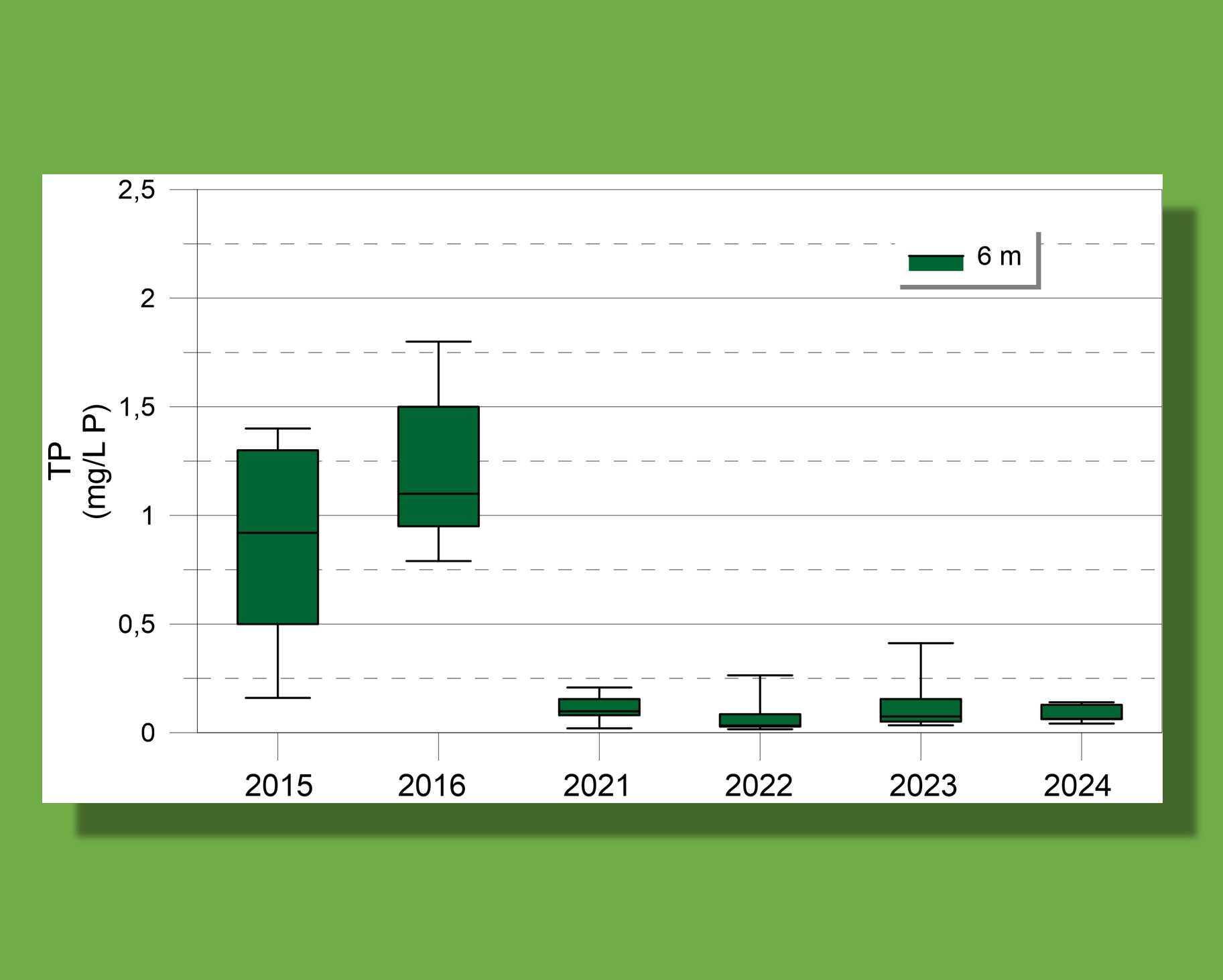
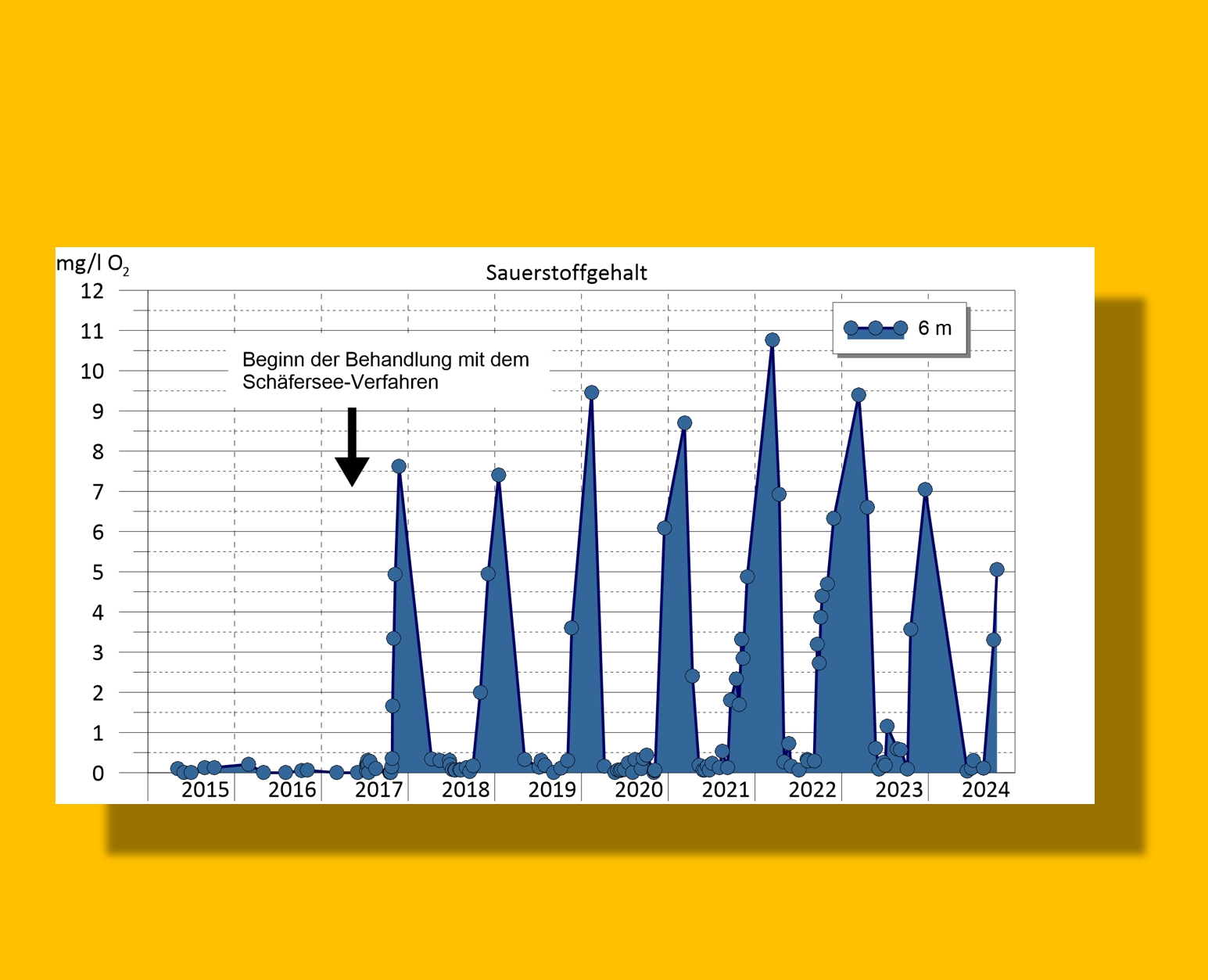
Building on practical experience gained prior to the project, the method was investigated and further developed under real operational conditions. Particular attention was given to how the targeted control of nitrate and oxygen inputs affects redox processes, microbial communities and internal nutrient fluxes in aquatic systems. Many of the investigated water bodies had previously shown typical impact symptoms such as oxygen-depleted deep water zones, formation of putrefaction gases, odour events and recurring release of nutrients from the sediment.
Three very different project lakes were investigated in detail: Schäfersee in Berlin, Fennsee in Berlin and Jröne Meerke in Neuss. Together they represent a spectrum ranging from a stratified urban lake to a highly impacted stormwater-dominated water body and an artificial groundwater lake with a small anoxic deep zone.