


What this is about Water bodies considered “hopeless cases”
Schäfersee-Verfahren® is designed for heavily impacted water bodies – partly urban lakes, partly systems strongly influenced by stormwater – where lake management has often been debated for years without producing lasting results. Typical symptoms include persistent oxygen depletion, foul odours, occasional fish mortality and a strong internal load originating from the sediment. During warm summer periods such systems frequently reach critical conditions: oxygen disappears from the deep water, putrefaction gases rise from the sediment and previously bound nutrients are released back into the water column. Under strongly reducing conditions toxic compounds such as hydrogen sulfide (H₂S) may form in the deep water and sediment. In practice these lakes are therefore often regarded as “hopeless cases”, because simple measures fail to address the underlying processes.
As a result, individual measures are frequently proposed: reed belts, pretreatment systems, phosphorus precipitation, fountains or simple aeration devices. While such approaches can be useful in certain situations, they often fail to address the core problem in heavily impacted urban lakes: unstable redox conditions in the deep water and at the sediment–water interface. These unstable conditions repeatedly trigger oxygen deficits, toxic decomposition processes, odour formation, internal nutrient release and new phases of ecological stress within the water body.
Basic principle Process-based stabilisation
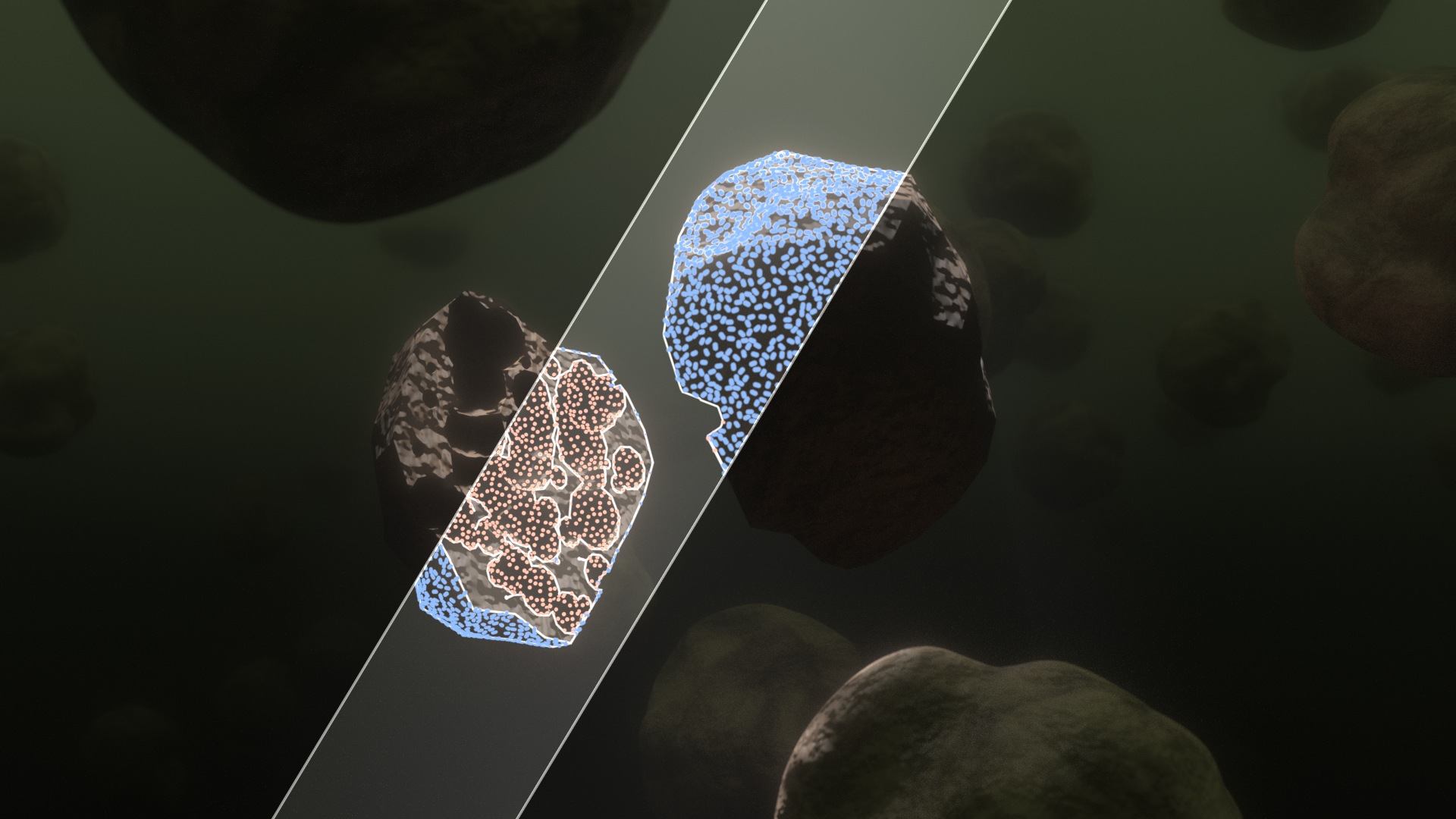
Schäfersee-Verfahren® specifically addresses processes occurring in deep water and within the sediment. The approach is based on what we describe as a process-based support of natural lake processes – in German referred to as “Stützung”. Instead of applying a one-time technical intervention, the method stabilises microbial degradation processes in those parts of the system where a large share of the ecological stress originates.
This stabilisation is achieved through a controlled combination of oxygen and nitrate inputs. Both substances are natural components of aquatic biogeochemical cycles and can serve as electron acceptors for microbial metabolism. By maintaining sufficiently oxidising conditions in the deep water and at the sediment–water interface, the formation of toxic putrefaction gases such as hydrogen sulfide can be prevented and the release of previously bound substances from the sediment can be reduced.
The method therefore does not aim to chemically transform the lake, but to support its natural microbial processes so that degradation of organic matter proceeds under stable and controlled conditions rather than under strongly reducing states.
Schäfersee-Verfahren® is not a one-time chemical intervention but a monitoring-based operational approach. Dosing and control are adapted to site-specific conditions and continuously adjusted according to the observed state of the system. The water body is therefore treated as a dynamic system whose condition is continuously monitored and stabilised through targeted support.
Practical applications Stabilisation of impacted lakes and suppression of toxic decay processes
Schäfersee-Verfahren® was developed by Büro Wassmann and designed for different types of impact situations. In practice it has been applied in a range of aquatic systems – from urban lakes with severe odour problems to strongly eutrophic water bodies with anoxic deep water and heavily impacted sediments.
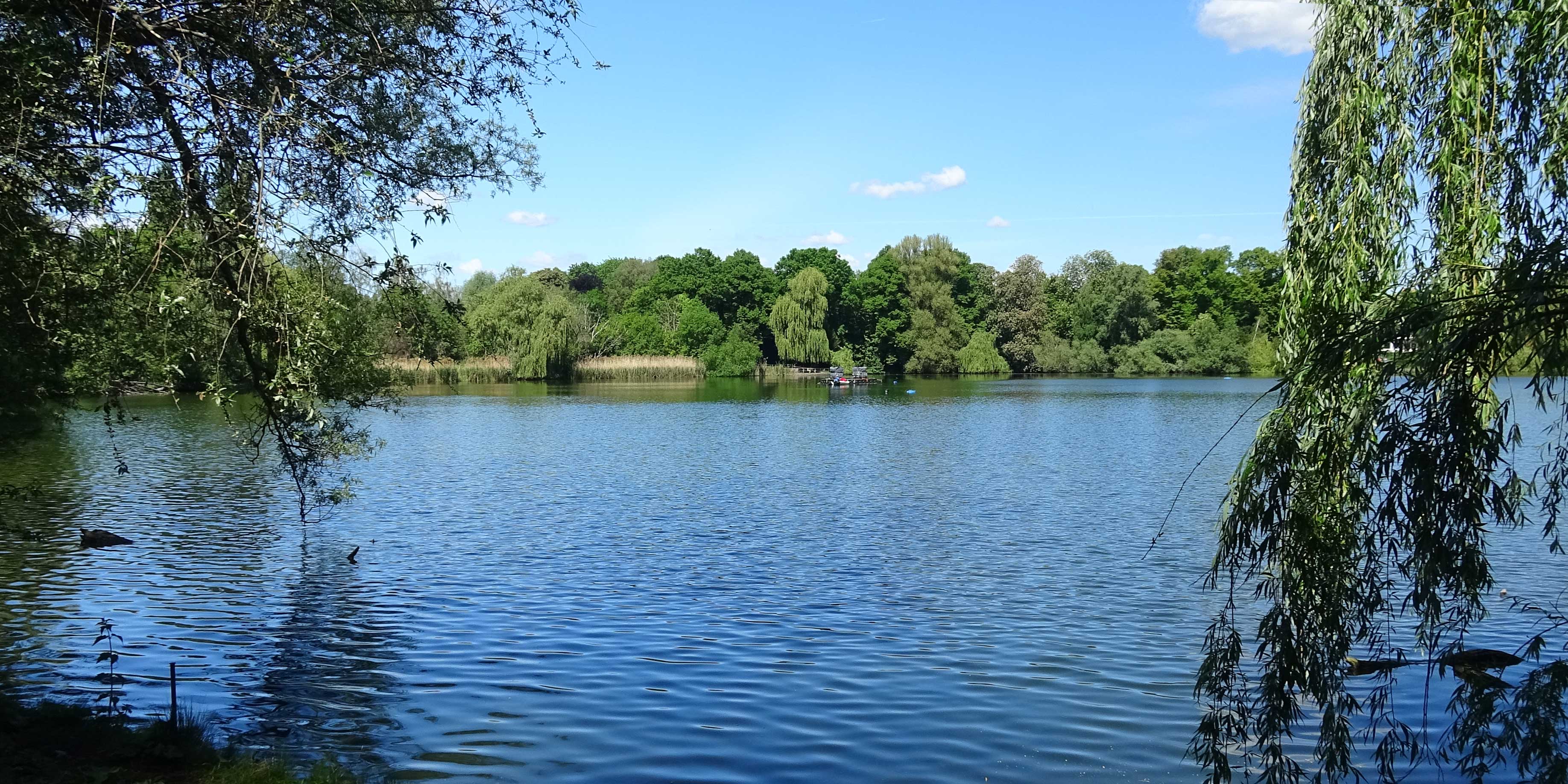
At Schäfersee the practical implications of this approach can be observed particularly clearly. In the past, hydrogen sulfide regularly occurred in the deep water during summer periods – a highly toxic gas formed under strongly reducing conditions that severely limits biological life in aquatic systems. Since the implementation of Schäfersee-Verfahren®, hydrogen sulfide has no longer been observed in the lake’s deep water for more than ten years. This represents not merely an improvement in odour conditions but a fundamental change in the chemical environment of the lake. When toxic decomposition processes disappear, space for biological activity can re-emerge.
Observations at the lake When toxic decay processes disappear, life returns
Changes in a water body are not only visible in monitoring data. They also become visible in the way the ecosystem is used by living organisms. At Schäfersee such changes can now be observed in everyday life: fish, waterfowl and hunting diving birds again use the lake as a habitat.
Some of these observations have been documented by local nature observers and photographers around the lake. A selection of these impressions can be found on the page Life at Schäfersee .
Details on locations, case studies and project contexts can be found under Projects. Background information on the development and scientific investigation of the method is available under Research. The functional principle of the method is explained under Innovation.